Does the government spend £50 billion on debt interest payments?

What was claimed
We spend nearly £50 billion on debt interest in the UK.
Our verdict
The government’s debt interest bill was £48 billion in 2016/17, although it effectively paid some of that back to itself through the Bank of England. The government actually spent about £39 billion.
“Today we spend nearly £50 billion in payments on interest to those we have borrowed from as a result of the legacy of the Labour party. That is more than the NHS pay bill, it is more than our schools budget, more than we spend on defence, as a result of the record we were left by Labour in government”
Theresa May, 1 November 2017
The UK government’s debt interest bill was about £48 billion in 2016/17, but that’s not the most meaningful figure to be using.
The government effectively pays some of that to itself. As we’ve covered before, almost a quarter of government debt is owned by the Bank of England, which pays the profit back to the Treasury.
The total amount of spending on what are called ‘public debt transactions’ amounted to £39 billion in 2016/17, once you take off what the Bank of England owns.
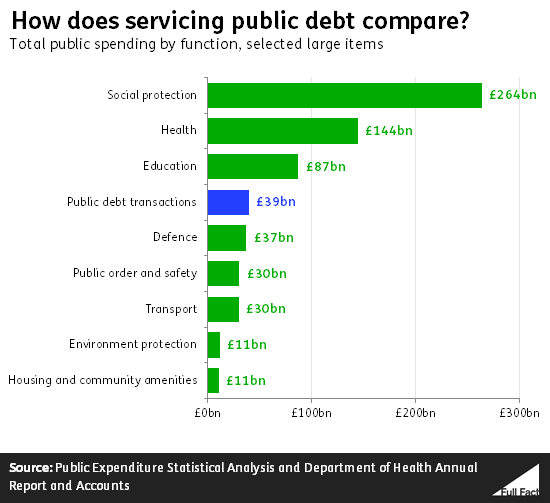
This is higher than spending on defence and primary education, but slightly lower than spending on secondary education.
Join 74,000 newsletter subscribers who trust us to check the facts
Sign up to get weekly updates on politics, immigration, health and more.
Subscribe to weekly email newsletters from Full Fact for updates on politics, immigration, health and more. Our fact checks are free to read but not to produce, so you will also get occasional emails about fundraising and other ways you can help. You can unsubscribe at any time. For more information about how we use your data see our Privacy Policy.
It is also lower than the NHS pay bill. The Department of Health’s annual report shows that £48 billion was spent on permanent staff costs in 2016/17, increasing to £54 billion when including other staff.
Was this helpful?
Full Fact fights for good, reliable information in the media, online, and in politics.