Has austerity hit the most vulnerable the hardest?

What was claimed
The hardest hit by austerity have obviously been the most vulnerable in society.
Our verdict
That's correct according to various analyses of tax and benefit policies. But the poorest UK households have also seen their post-tax incomes rise faster than any other group since 2010.
“The hardest hit by austerity have obviously been the most vulnerable in society.”
George the Poet, 4 October 2018
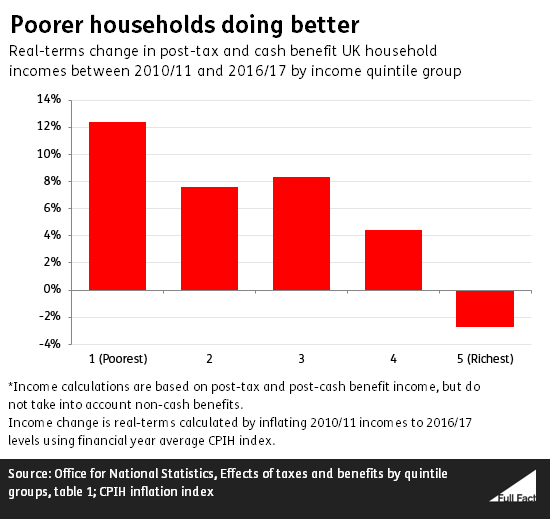
Poorer households have been more negatively affected by tax and benefit changes since 2010, but their incomes have also increased the most on average since 2010—by 12% in real terms between 2010/11 and 2016/17.
That’s because the incomes of the poorest households have, on average, increased far more since 2010 than the negative impact of increased taxes and reduced benefits. Also many of the tax and benefit changes expected to affect poorer households (e.g. Universal Credit) have not yet been fully implemented.
A report by the Equality and Human Rights Commission last year found that, in England, Wales, and Scotland, households in the bottom half of the income distribution lost more (in terms of net income) from tax and benefit changes since 2010 than those in the top 10%. Those in the bottom 11-40% lost the most on average.
In addition women, lone parents, ethnic minorities and households with a disabled member were typically hit harder than other groups.
This is supported by analysis from the Institute for Fiscal Studies (IFS). It found that during the Coalition government, UK households with the bottom 40% of incomes were more negatively affected than the average household.
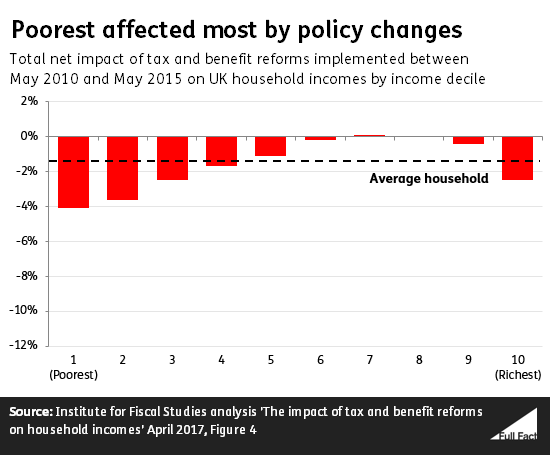
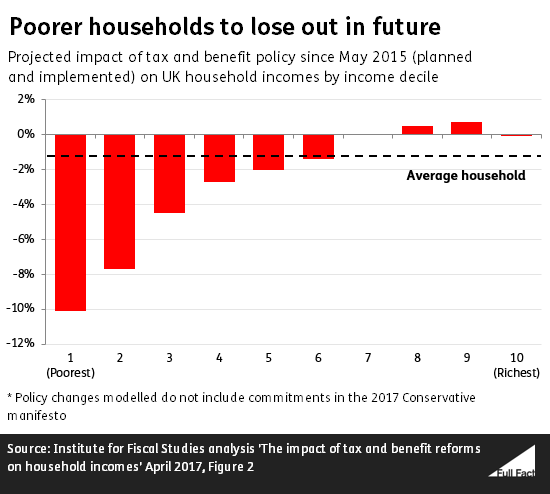
Data from the Office for National Statistics shows that between 2010/11 and 2016/17 (the latest year for which data is available) poorer UK households had bigger real-terms post-tax and benefit income rises than richer households.
Join 74,000 newsletter subscribers who trust us to check the facts
Sign up to get weekly updates on politics, immigration, health and more.
Subscribe to weekly email newsletters from Full Fact for updates on politics, immigration, health and more. Our fact checks are free to read but not to produce, so you will also get occasional emails about fundraising and other ways you can help. You can unsubscribe at any time. For more information about how we use your data see our Privacy Policy.
Was this helpful?
Full Fact fights for good, reliable information in the media, online, and in politics.