Economy, Business & Finance
Would early closure of the Renewables Obligation to onshore wind cost £100 million?
The government says closing the Renewables Obligation to onshore wind early will bring benefits of £160 million. Read
Fact checks about the passing of the 2016 Energy Bill in the UK Commons

Economy, Business & Finance
The government says closing the Renewables Obligation to onshore wind early will bring benefits of £160 million. Read
Economy, Business & Finance
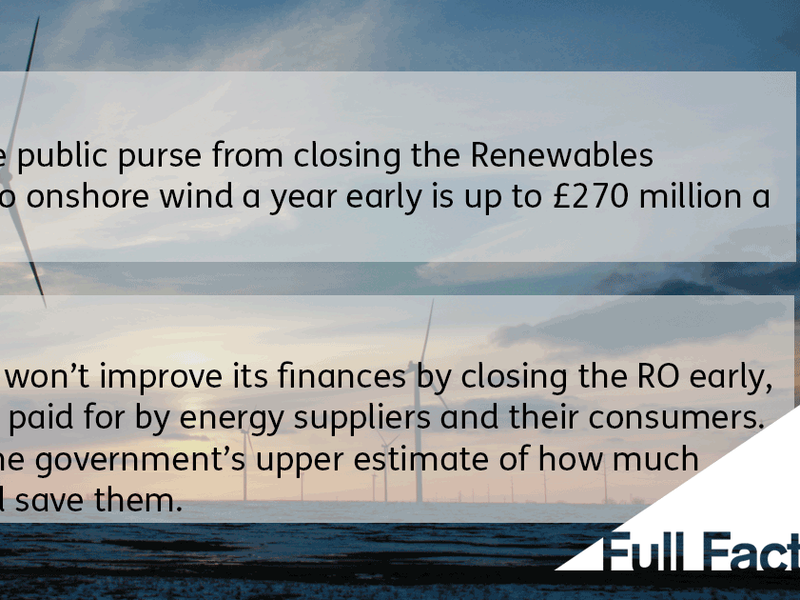
The impact of the early closure of the Renewables Obligation to onshore wind on public finances. Read
Economy, Business & Finance
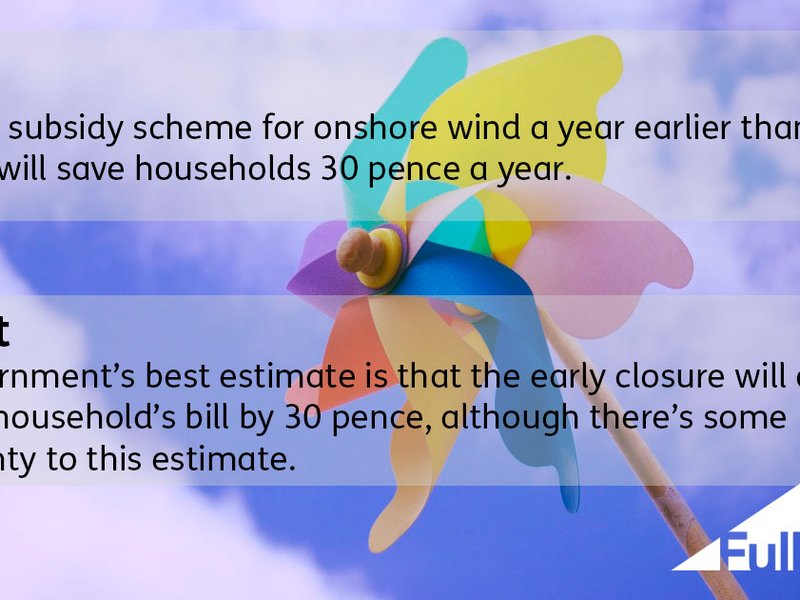
The government's best estimate is that the early closure will cut the average household's electricity bill by 30p, but there's some uncertainty about this. Read
Economy, Business & Finance
The government wants to close the Renewables Obligation to onshore wind a year early. How much capacity would miss out on its proposed grace period? Read
Economy, Business & Finance
It's been suggested that closing the Renewables Obligation to onshore wind could threaten 19,000 jobs. Read
Economy, Business & Finance
There's some confusion over the UK's renewable energy target. Here's our guide to what it is, where it comes from, and what might happen if it's missed. Read
Economy, Business & Finance
The UK met its interim renewable energy target for 2013 and 2014. The European Commission has suggested that the UK might be off track for its 2020 target. Read
Economy, Business & Finance
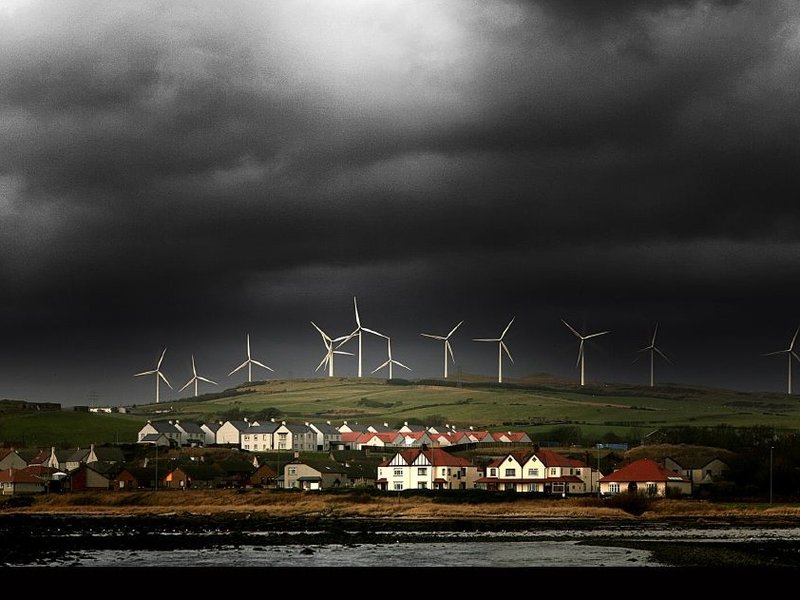
70% of respondents to a survey said they'd be happy to have a wind farm built in their local area. Some other forms of renewable energy are more popular. Read
Economy, Business & Finance
The House of Lords has been discussing whether, under the 'Salisbury Convention', it's obliged to pass the Energy Bill because it emerged from the Conservative manifesto. Read
Economy, Business & Finance
Based on guaranteed fixed prices, new nuclear power is expected to be cheaper than offshore wind but more expensive than onshore wind. Read